
Small Wild Things
Or, raising something fierce and tender

It all began when a wild brown rabbit nested under a hydrangea in our city yard. Despite alleys, closely packed homes, and postage-stamp backyards, rabbits made their home in our garden, drawn by the cool leaves and colorful blossoms—which, if you ask me, makes for an excellent summer vacation.
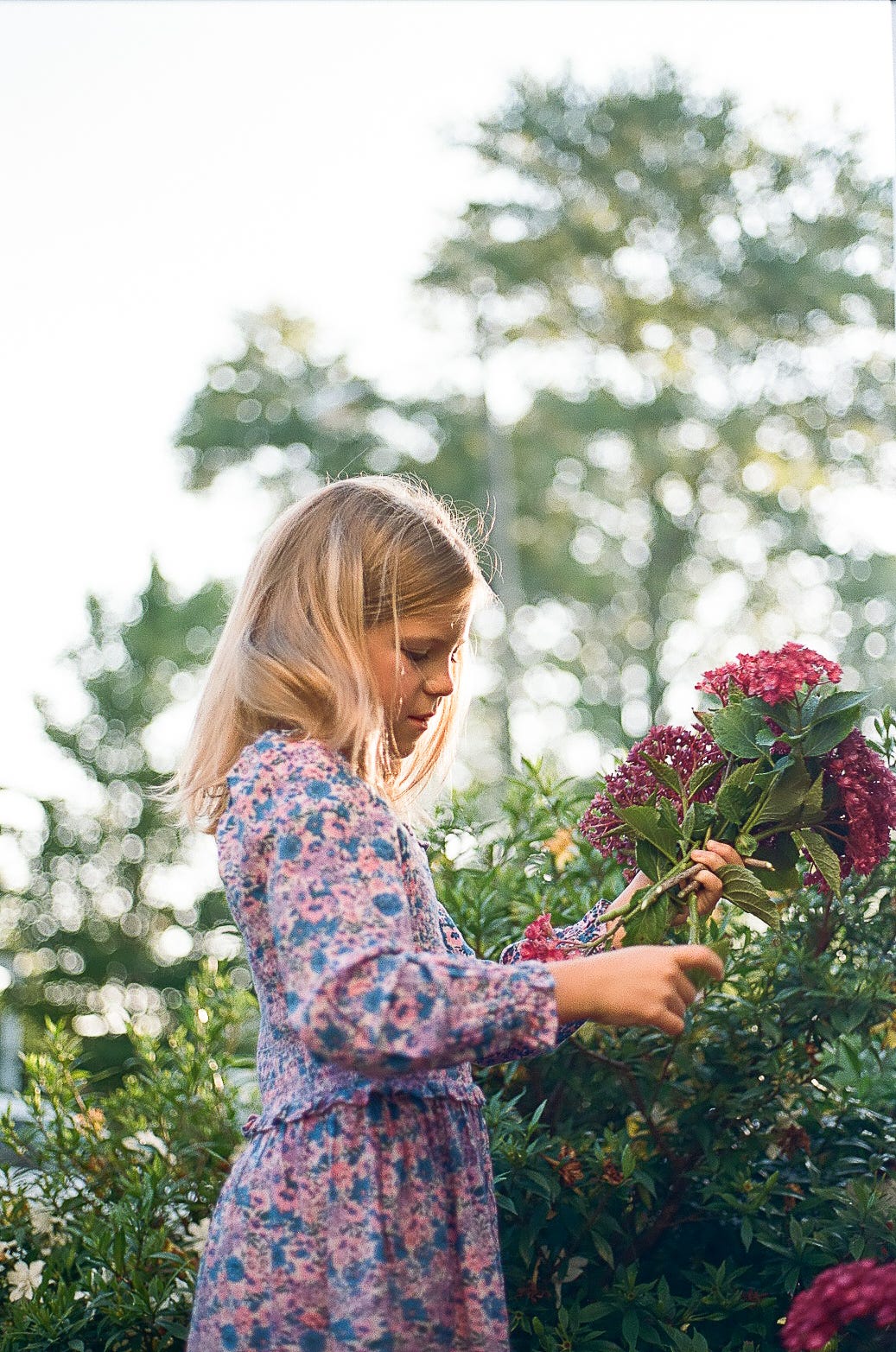
It was preschool spring break, which I did not know was a thing. I rescheduled client meetings in preparation for my two-year-old being home all week. I was a new mama. I was working. And to be very honest, I had no idea what I was going to do with her all day for an entire week. I loved her like I loved my breath, but we both thrived when we had just a little space of our own. The prospect of twenty-four-seven toddlering was daunting.
That morning, we went out for a walk. As we opened our gate, a baby bunny timidly hopped up onto the sidewalk and stopped directly in front of us—probably realizing its mistake—and froze.
My daughter, who had been singing, stopped immediately. She seemed to understand the magnitude of her luck. Without hesitation, as if it were the most obvious choice in the world, she reached down with two fingers outstretched and gently stroked the bunny.
To my surprise, the bunny allowed it.
I watched the two of them together and found myself thinking: Okay, maybe we can do this.
From then on, something in her belonged to the bunnies.
My girl was born fierce: both sensitive and intense—and I say that with awe and deep affection. But when I tell you it took multiple hours to get her to sleep each night—and that she woke early every morning with a literal THUD as she launched herself out of her “big girl bed” ready to take on the world—I mean, we were tired. Very tired.
Sleep deprivation turns parenting into a series of small, unhinged problem-solving exercises. The morning bunny hunts were ours. What else do you do with that much energy at 5:30 a.m.? You channel it by scouring the neighborhood for rabbits so one parent has a chance to sleep.
The delight on her face when she spotted one never got old. Her whole body would freeze. She’d turn her head slowly, eyes sparkling, finger to her lips to signal that the hunt had begun. We weren’t allowed to move an inch as she crept forward, step by careful step, hoping—always—to pet the bunny again.
Of course, like any sensible rabbit, the moment it realized a game was afoot, it bolted. Ix-nay on the oddler-tay. (translation: wild rabbits take a hard pass on toddlers).
We spent years chasing bunnies through every nook and cranny of the neighborhood—behind bushes, under parked cars, along fences. And somewhere along the way, I noticed something: the same child who could not slow down for sleep could slow down for a rabbit. Her voice softened. Her breath changed. Her body learned stillness in the presence of something fragile.
When COVID hit, everything felt both bigger and smaller. My four-year-old “Energizer Bunny,” an endless whirl of motion and chatter, suddenly had no preschool classroom to channel her exuberance or friends to absorb it. In that new reality, I was desperate for thirty minutes to myself, so I dusted off an old iPad, downloaded Audible, and introduced “rest time.” Though I never said it out loud, it was less about rest and more about survival.
During one such hour of “mandatory fun,” she listened to a calming story about Peacebunny Island—an island of hope, hugs, and hopping, where rabbits are trained as emotional support animals.
“Mama please, can we gooo?” she asked, eyes wide.
Everything in me wanted to say yes.
Bunnies had a strange power over her. Nothing else regulated her like they did. Just imagining an island full of bunnies cracked something open in my heart. Inspired, I started researching rabbitries and discovered—dangerously—that a baby bunny costs only fifty dollars. This fact should be accompanied by a waiver.
And so it was that we drove to pick up our pandemic pet: a white Holland Lop named Jack (as in Jack Rabbit), with blue eyes and the softest fur imaginable. We were immediately smitten. He was cuddly and cute, and he seemed lonely, so we decided to get him a companion.
Lady arrived shortly after. What we didn’t know—what no one tells you in the fifty-dollar bunny transaction—is that not all rabbits are meant for communal living. Jack made this painfully clear when he killed his pregnant playmate.
Appalled and heartsick, we traded his violent self for Sugar and Grey.
Sugar was gentle in a way that felt almost intentional. She used to kiss my daughter with her little sweet tongue, and at the time, there was nothing more heartwarming in the world.
Sugar died of heat exhaustion under the care of a neglectful babysitter who called us to deliver the news while we were away. If you’ve ever had to tell your four-year-old daughter over FaceTime that her favorite bunny died, you know there are no right words—only your face, trying not to break. It’s exactly as impossible as it sounds.
We brought home Belle and Bailey next, hoping for a quieter chapter.
Bailey arrived sick and passed only days later—though, absurdly, we did get a refund. Belle, it turned out, had a heart murmur.
Belle lived happily with us for several years, bonding with Grey. When her heart began to fail, somehow we knew. We brought her inside. We sang to her. We pet her. Then we set her back in her hutch, and she passed shortly after.
Grey girl was left alone.
I didn’t know bunnies could grieve, but Grey taught me otherwise. Her head drooped. Her eyes dulled. She refused food, refused movement, refused the world for a full day. I watched her carefully, bargaining silently the way mothers do.
She stayed.
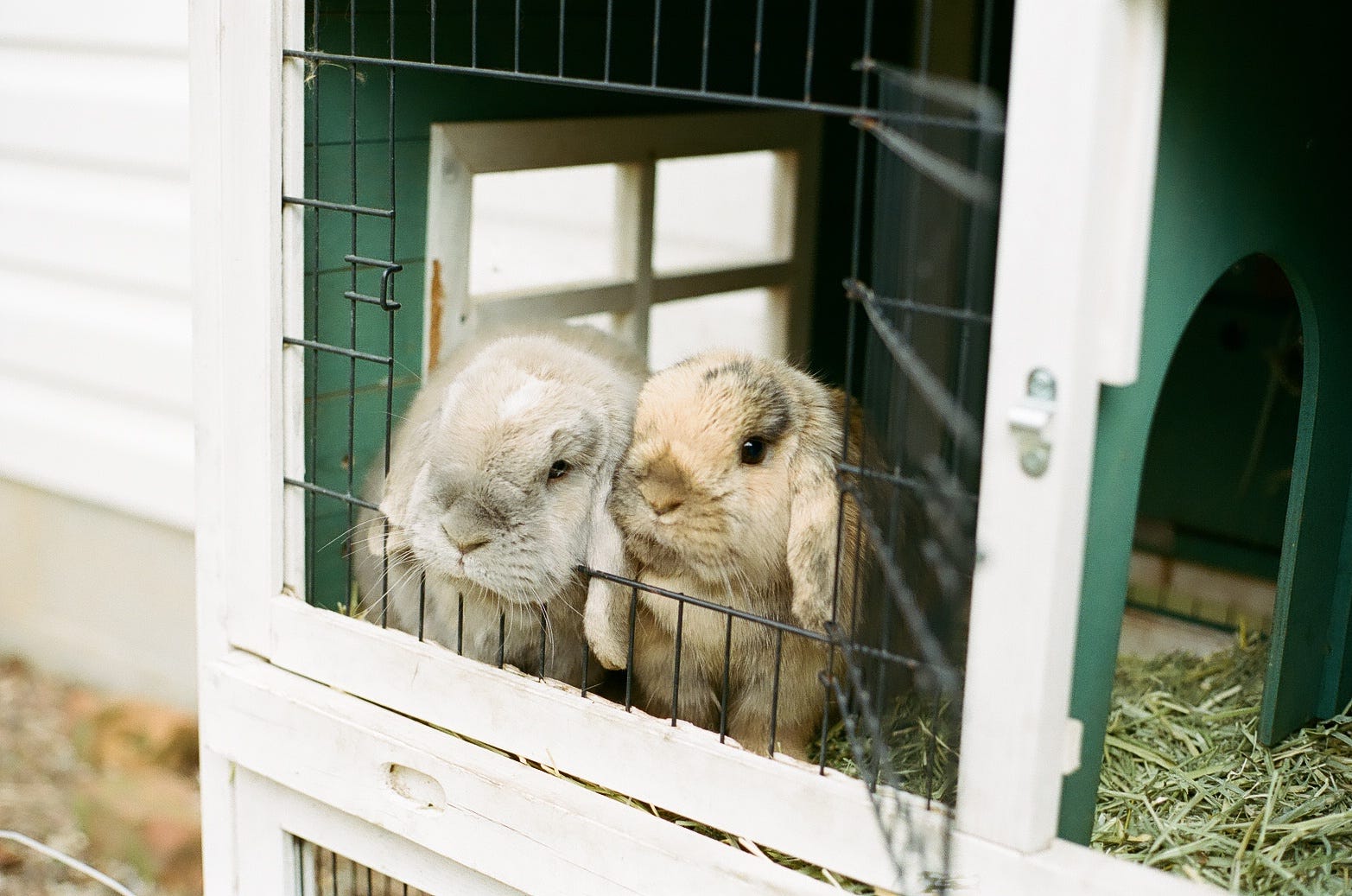
Life has returned to a regular rhythm. These days, Grey claims all the vegetable scraps and spends summer eating mint as if it were planted for her alone. She helps my daughter pay for camp by patiently posing as the live bunny in spring portraits. During our homeschool days, she is the “brain break” of choice. If you catch the right moment, you’ll find my girl twirling with her bunny—careful, delighted, and moving with a practiced gentleness I never would have imagined in her early years.
I often think about that first morning on the sidewalk. The wild baby bunny. The way my daughter instinctively lowered her voice, her body, her hands. I still find myself amazed by who she was then—and who she is now. The best surprise of my life has been watching who she is becoming—through early mornings, through backyard bunnies, through love and loss that have, again and again, asked her to slow down. Somewhere in all of it, I found the reassurance I’d been searching for: we were going to be okay.
We never made it to Peacebunny Island. But somehow, piece by piece, we built something like it right here in our postage-stamp backyard.
This post is part of a blog hop with Exhale—an online community of women pursuing creativity alongside motherhood, led by the writing team behind Coffee + Crumbs. Click here to view the next post in the series "Surprise."
I have loved bunnies all my life. Because infertility was so much part of our early story I cycled back to having a bunny in Sydney and he has ended up on a 2 meter art piece, when he came a photo shoot. He died (also a neglectful pet sitter!) and my girls don't remember him, but his piece in our family is always there in the art. I love the stillness and care that bunnies bring.
This is the SWEETEST thing.